Quick Answer: Feeling stuck is not a personal failure — it’s a signal that something needs to shift. The good news? There are simple, feel-good ways to break out of that fog. This guide covers 30 things to do when you feel stuck, from five-minute mood lifts to deeper resets that actually work for busy moms and women craving a softer, more intentional life.
Key Takeaways 🌸
- Feeling stuck is normal and temporary — small actions create real momentum
- Physical movement, even gentle walks, can shift your mental state quickly
- Journaling and creative outlets help process emotions without overwhelm
- Rest is productive — sometimes the best reset is doing less, not more
- Social connection (even a quick text to a friend) can break isolation loops
- Changing your environment, even briefly, gives your brain a fresh perspective
- Soft, low-pressure activities are often the most effective for women in burnout
- Consistency in tiny habits matters more than one big dramatic change
Why Do Women Feel Stuck in the First Place?
Feeling stuck usually means your current routine, mindset, or environment no longer fits where you want to go. For moms and women managing a lot, it often shows up as mental fog, low motivation, or that restless “something needs to change” feeling with no clear direction.
Common triggers include:
- Burnout from giving too much without refilling your own cup
- Decision fatigue from constant caregiving or work demands
- Comparison traps from scrolling social media too long
- Unclear goals or a lack of personal identity outside of roles (mom, partner, employee)
Recognizing the cause helps you choose the right reset from the list below.
30 Things To Do When You Feel Stuck: The Full List
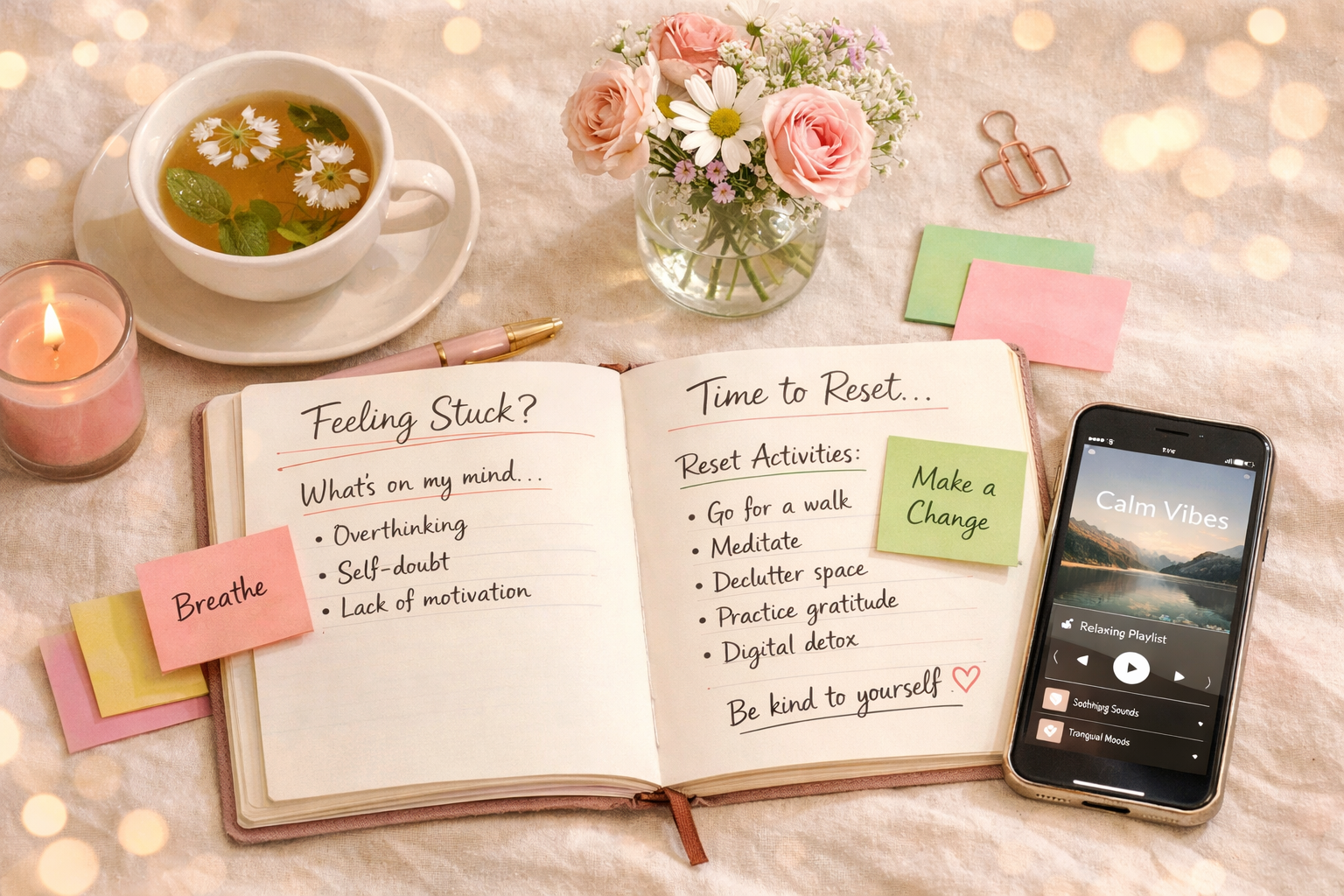
Here are 30 gentle, practical ideas — no hustle culture required.
Quick Mood Lifts (Do These in Under 10 Minutes)
- Make a cup of something warm. Tea, coffee, hot cocoa — the ritual itself is calming.
- Step outside for fresh air. Even two minutes on a porch counts.
- Put on a feel-good playlist. Music shifts energy faster than almost anything.
- Tidy one small surface. A clean corner creates mental clarity.
- Text a friend something kind or funny — connection breaks isolation instantly.
- Splash cold water on your face. Simple, but it works as a physical reset.
- Write down three things you can see, hear, and feel. A quick grounding exercise.
- Stretch for five minutes. Tension lives in the body, and releasing it helps.
Journaling and Reflection Activities
- Write a brain dump. Fill one page with everything on your mind — no editing.
- List 10 things that made you smile this week. Tiny moments count.
- Ask yourself: “What would feel good right now?” Then actually do it.
- Write a letter to your future self about where you want to be in six months.
- Make a “not-to-do” list. Identify what you want to stop doing — it’s freeing.
Creative and Sensory Resets
- Doodle or color something. No artistic skill needed — it’s about the process.
- Cook or bake something from scratch. The focus required is meditative.
- Rearrange a small space in your home. New arrangement, new energy.
- Try a new scent — a candle, essential oil, or lotion. Scent is tied to mood and memory.
- Watch a comfort show or movie without guilt. Rest is not laziness.
Movement and Body-Based Resets
- Go for a slow, purposeful walk — no destination required.
- Dance in your kitchen. Seriously. Put on one song and just move.
- Do a short yoga video. Even 10 minutes of gentle yoga reduces cortisol.
- Take a long bath or shower and treat it like a spa moment.
- Lie on the floor and breathe deeply for three minutes. It sounds too simple — try it anyway.
Mindset and Perspective Shifts
- Unfollow or mute accounts that make you feel behind or less-than.
- Read something inspiring — a book, a blog post, or even a motivational quote.
- Talk to someone you trust about how you’re feeling. Saying it out loud helps.
- Revisit an old hobby you’ve abandoned. Reconnecting with past joy is powerful.
- Give yourself permission to start over. Any day can be a new beginning — not just January 1st.
Bigger Resets for When You’re Really Stuck
- Plan a solo date — a coffee shop, a museum, a bookstore trip, just for you.
- Write down one small goal for the next seven days and take one action toward it today.
💬 “You don’t need a dramatic life overhaul. Sometimes the softest, smallest step is the one that finally moves you forward.”
How To Actually Use This List (Without Feeling Overwhelmed)
Pick one thing, not thirty. The biggest mistake women make with lists like this is treating them as a to-do list rather than a menu of options.
A simple approach:
| How You’re Feeling | Best Starting Point |
|---|---|
| Mentally foggy or anxious | Brain dump journaling or grounding exercise |
| Physically tired | Rest, bath, or gentle stretching |
| Emotionally flat or sad | Music, a comfort show, or calling a friend |
| Restless but unmotivated | Walk, kitchen dance, or rearrange a space |
| Craving direction | Write a small goal or future-self letter |
Choose based on your current energy, not what you think you should do.
What To Do When You Feel Stuck in Life Long-Term

Short-term fixes help, but if the stuck feeling keeps coming back, it’s worth looking deeper. Long-term stagnation often signals a need for one of these bigger shifts:
- A change in your daily routine — even small ones, like a new morning ritual
- Reconnecting with personal values — asking what actually matters to you, not what others expect
- Setting a boundary that you’ve been avoiding
- Seeking support from a therapist, coach, or trusted community
Feeling stuck long-term is not a character flaw. It’s often a sign that you’ve been prioritizing everyone else’s needs for too long.
FAQ: 30 Things To Do When You Feel Stuck
Q: How long does the “stuck” feeling usually last? It varies. For most people, it’s temporary and lifts within days or weeks when small actions are taken. If it persists for months and affects daily functioning, speaking with a mental health professional is a good idea.
Q: Is it okay to just rest when I feel stuck? Yes. Rest is often the most productive thing a burned-out woman can do. Pushing harder when you’re depleted usually makes the stuck feeling worse.
Q: What’s the fastest way to feel unstuck? Physical movement — even a five-minute walk or dance break — tends to shift mood faster than mental strategies alone.
Q: Can journaling really help? Yes. Writing externalizes thoughts, which reduces their emotional weight. A simple brain dump (writing everything on your mind without editing) is one of the most effective low-effort tools available.
Q: What if I don’t have time for any of these? Start with a two-minute activity: deep breathing, a short stretch, or sending a kind text. Momentum builds from the smallest action.
Q: Are these ideas suitable for moms with young kids? Most of them are. Many can be done during nap time, after bedtime, or even alongside kids (dancing, baking, walking outside).
Q: What’s the difference between feeling stuck and depression? Feeling stuck is often situational and improves with small changes. Depression is a clinical condition that involves persistent low mood, loss of interest, and other symptoms lasting two weeks or more. If you’re unsure, a doctor or therapist can help clarify.
Q: Should I do all 30 things on this list? No. Think of it as a menu, not a checklist. Pick what resonates with where you are right now.
Conclusion: Your Gentle Next Step
Feeling stuck doesn’t mean you’re broken or falling behind. It means you’re human — and probably someone who gives a lot of herself to others. The 30 things to do when you feel stuck in this guide are not about fixing yourself. They’re about returning to yourself.
Your action step for today: Pick just one item from the list above. The smallest one that feels doable right now. Do it before the end of the day. That’s it. One small move is all it takes to start shifting the energy.
You’ve got this. 🌸