Quick Answer: The 10 small changes that change everything are tiny, low-effort habit shifts that add up to a noticeably calmer, more joyful daily life. They don’t require a full schedule overhaul or a lot of money. They work best for busy moms and women who want more ease, more softness, and a little more peace in their everyday routine.
Key Takeaways
- Small changes work because they’re easy to start and easy to keep going.
- Morning routines, hydration, and sleep are the three fastest wins.
- Saying no more often is a change that protects your energy without costing anything.
- Reducing screen time before bed can improve sleep quality noticeably within a week.
- Gentle movement (even 10 minutes) counts and adds up over time.
- Creating one “just for me” moment daily builds emotional resilience.
- Decluttering one small space reduces mental load more than most people expect.
- Journaling for five minutes a day helps process emotions and reduce anxiety.
- Swapping one processed snack for a whole food daily is a sustainable nutrition shift.
- Consistency with small habits matters far more than intensity or perfection.
Why Do Small Changes Actually Work?
Small changes work because they don’t trigger resistance. Big goals feel heavy, and heavy goals get abandoned. Tiny shifts, on the other hand, are easy to start on a Tuesday afternoon with no preparation required.
Behavioral science backs this up. Stanford researcher BJ Fogg, in his book Tiny Habits (2019), explains that behavior change is most lasting when it’s small, specific, and attached to something already happening in your day. The brain doesn’t fight small. It accepts small.
For moms especially, the idea of a complete lifestyle overhaul is exhausting before it even begins. But drinking one extra glass of water in the morning? That’s doable. And doable is everything.
What Are the 10 Small Changes That Change Everything?
These are the ten shifts that consistently show up in wellness research, habit coaching, and the real-life experiences of women who’ve moved from burnout to balance.
1. 🌅 Start Your Morning With Water Before Coffee
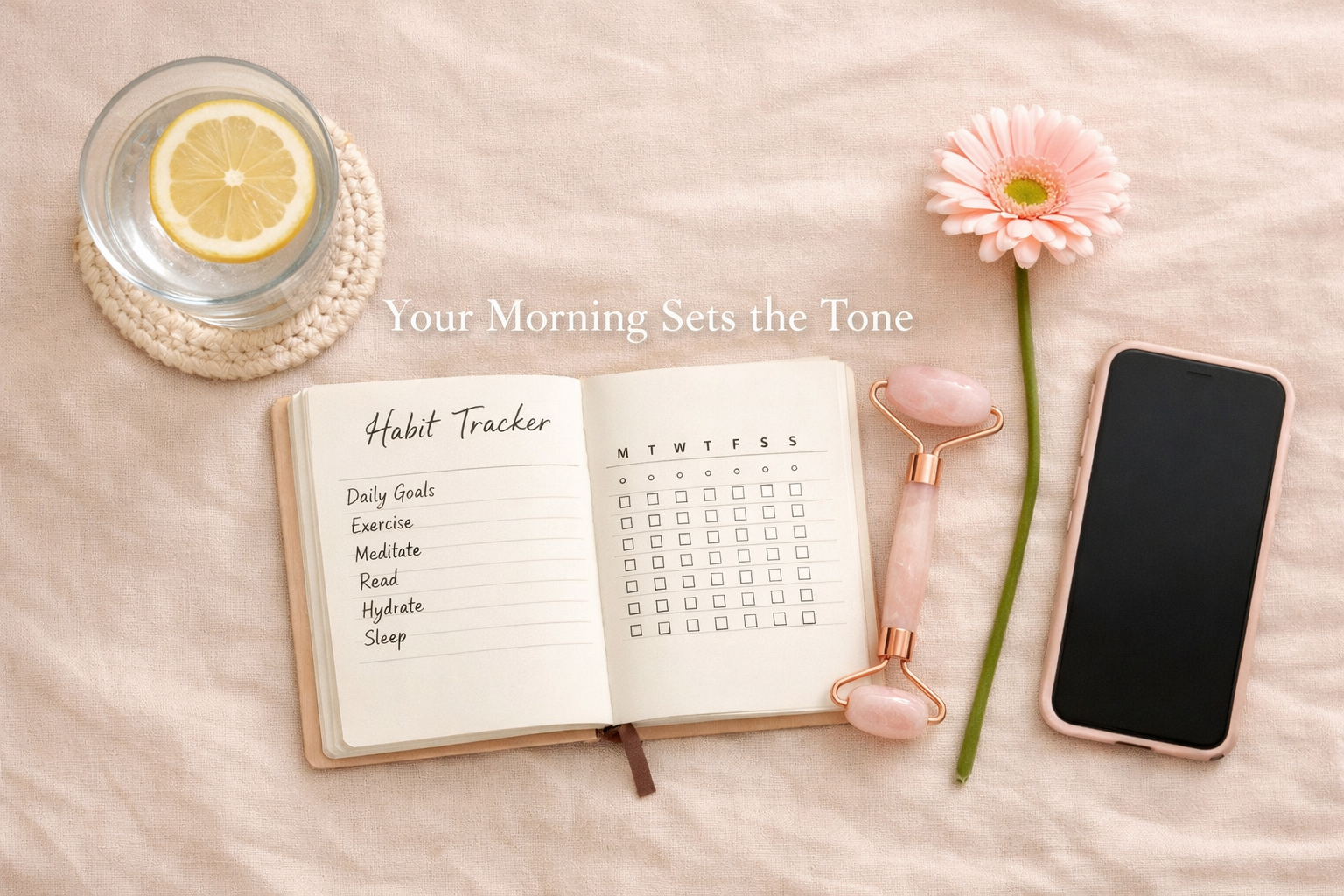
Drink one full glass of water before reaching for caffeine. After hours of sleep, the body is mildly dehydrated, and that dehydration shows up as brain fog, low mood, and fatigue. Water first takes about 30 seconds and changes how the first hour of the day feels.
Common mistake: Skipping this because it feels too simple. Simple is the point.
2. 📵 Put Your Phone Down 30 Minutes Before Bed
Screen light and social media scrolling keep the brain in alert mode. Swapping that 30 minutes for reading, stretching, or just sitting quietly signals to the nervous system that the day is over. Most women who try this report falling asleep faster within the first week.
3. 📓 Write Three Things Down Every Morning
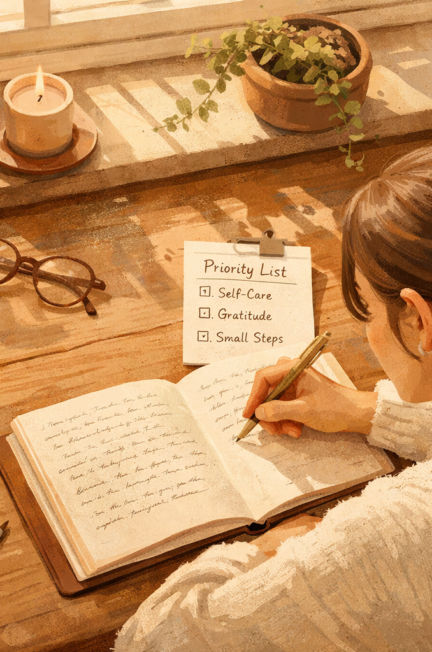
This doesn’t have to be a full journal entry. Three things to do, three things to feel grateful for, or just three thoughts. Getting them out of the head and onto paper reduces the mental clutter that builds up by 9 a.m. and never fully clears.
4. 🚶♀️ Move Your Body for 10 Minutes Daily
Not a workout. Not a gym session. Just movement. A walk around the block, some gentle stretching, or dancing in the kitchen while the coffee brews. Ten minutes of daily movement is enough to shift mood, energy, and stress levels when done consistently.
5. 🥗 Swap One Snack for a Whole Food
Pick one processed snack in the day and replace it with something real: fruit, nuts, a boiled egg, veggies with hummus. One swap. That’s it. Over weeks, this small shift changes energy levels and reduces the afternoon crash that so many moms know too well.
6. 🧹 Tidy One Small Space Daily
Not the whole house. One surface, one drawer, one corner. A tidy space communicates safety to the nervous system. Clutter, even when ignored consciously, creates low-level stress that drains energy. Five minutes of tidying one spot daily is enough to feel the difference.
7. 🙅♀️ Say No to One Thing Per Week
One commitment, one favor, one obligation that doesn’t align with current capacity. Saying no is a skill, and like any skill, it gets easier with practice. Each no protects time and energy for what actually matters.
8. 🌿 Create One “Just for Me” Moment Daily
This is non-negotiable. One small thing that exists only for personal enjoyment: a cup of tea in silence, a bath, a chapter of a book, a skincare routine done slowly. It doesn’t need to be long. It needs to be intentional and protected.
9. 💬 Reduce One Draining Relationship Input Per Week
This could mean muting a social media account, shortening a phone call, or simply choosing not to engage with a conversation that consistently leaves a feeling of exhaustion. Protecting emotional energy is just as important as protecting physical energy.
10. 🛏️ Prioritize Sleep Over Productivity at Night
Staying up late to “get things done” is a trade that rarely pays off. Sleep is when the body repairs, the brain processes, and emotional regulation resets. Choosing sleep over a late-night to-do list is one of the most powerful decisions in this entire list.
How Do These Small Changes Add Up Over Time?
Individually, each of these shifts feels minor. Together, they create a completely different daily experience. Here’s a simple way to see the cumulative effect:
| Small Change | Daily Time Investment | Cumulative Benefit Over 30 Days |
|---|---|---|
| Water before coffee | 1 minute | Better hydration, clearer mornings |
| Phone off 30 min before bed | 30 minutes | Improved sleep quality |
| Morning journaling | 5 minutes | Reduced anxiety, clearer thinking |
| 10-min movement | 10 minutes | 300 minutes of movement per month |
| One whole food swap | 2 minutes | Steadier energy, better nutrition |
| Tidy one space | 5 minutes | Calmer home environment |
| One weekly no | Varies | More protected time and energy |
| Daily “just for me” moment | 10–15 minutes | Lower stress, higher joy |
| Reduce draining input | Varies | Emotional energy preserved |
| Earlier sleep | 30–60 minutes | Full nervous system recovery |
None of these require a new schedule. They slot into what’s already happening.
Who Are These 10 Small Changes That Change Everything Best For?
These changes are designed for women who are already doing a lot and want to feel better without adding more to their plate. They work especially well for:
- Moms managing a full household with little personal time.
- Women in a “soft girl era” who are actively choosing ease over hustle.
- Anyone recovering from burnout who needs gentle re-entry into self-care.
- Women who’ve tried big wellness programs and found them unsustainable.
They’re not the right fit for someone looking for rapid physical transformation or a structured fitness program. These are lifestyle softeners, not performance strategies.
What Mistakes Should Be Avoided When Starting?

The biggest mistake is trying to start all ten at once. That turns small changes into a big project, which defeats the purpose entirely.
Start with two. Pick the water habit and the phone-before-bed habit. Do those for two weeks. Then add one more. The goal is to make each change feel automatic before layering in the next one.
Other common mistakes:
- Expecting to feel different after one or two days (give it two to three weeks).
- Treating a missed day as a failure and quitting entirely.
- Choosing changes that don’t actually appeal personally (swap any of these for something that genuinely sounds good).
Conclusion: A Softer Life Starts With One Small Yes
The 10 small changes that change everything aren’t about becoming a different person. They’re about giving the person already here a little more support, a little more rest, and a little more joy. Start with one change today. Not tomorrow. Not Monday. Today.
Pick the one that sounds the easiest and do it once. That’s the whole plan. Everything else builds from there.
Your next step: Choose one change from this list and do it before the day ends. Write it down if that helps. Tell a friend if that helps more. Then do it again tomorrow.
A softer life is built one small yes at a time. 🌸
FAQ
Q: How long does it take to see results from small habit changes? Most people notice a shift in mood and energy within one to two weeks of consistent practice, though some changes (like better sleep from reduced screen time) can show results in just a few days.
Q: Do all 10 changes need to be done at the same time? No. Starting with just one or two is the recommended approach. Adding too many changes at once increases the chance of dropping them all.
Q: Are these changes suitable for moms with very young children? Yes. Most of these take five minutes or less and can be done during nap time, after bedtime, or before the household wakes up.
Q: What if a “just for me” moment feels selfish? It isn’t. Rest and personal enjoyment are not luxuries; they’re what make sustained caregiving possible. Protecting personal time makes a person more present, not less.
Q: Can these changes help with anxiety? Several of them (journaling, reduced screen time, movement, and sleep) are directly linked to lower anxiety levels in wellness research. They’re not a replacement for professional mental health support, but they are meaningful complements.
Q: What if one of these changes doesn’t feel right? Swap it. These ten are suggestions, not rules. The goal is to find small shifts that genuinely feel good and are easy to maintain.
Q: Is journaling really necessary, or can it be skipped? It can absolutely be skipped. If writing feels like a chore, try a voice memo instead, or simply sit quietly for five minutes. The goal is mental clearing, not the specific act of writing.
Q: How do these habits connect to the soft girl era trend? The soft girl era is about choosing gentleness, ease, and joy over grinding and overextending. Every change on this list supports that philosophy directly.