
Quick Answer: Feeling lost in life is more common than most people admit, and it usually means something in your current routine, identity, or direction no longer fits who you are. The most effective way to stop feeling lost is to slow down, reconnect with your values, and take small intentional steps toward what actually matters to you — not what looks good on the outside.
Key Takeaways
- Feeling lost is a signal, not a flaw. It often means you’re ready for something new.
- Reconnecting with your values is the fastest way to find your footing again.
- You don’t need a five-year plan. Small, consistent actions build clarity over time.
- Rest and reflection are productive, especially for moms and women who are constantly giving to others.
- Comparing your path to someone else’s is one of the biggest reasons women feel stuck.
- Journaling, therapy, and honest conversations with trusted people can all help.
- The “soft girl era” mindset — choosing ease, joy, and self-care — is actually a solid foundation for rebuilding direction.
- Progress looks different for everyone. Slow is still moving forward.
Why Do So Many Women Feel Lost Right Now?
Feeling lost in life doesn’t mean something is wrong with you. It usually means your life has changed — through motherhood, a career shift, a relationship ending, or simply growing into a different version of yourself — and your sense of identity hasn’t caught up yet.
For moms especially, it’s incredibly easy to pour everything into everyone else and wake up one day not knowing what you actually want anymore. That’s not weakness. That’s what happens when you’ve been in survival mode for too long.
Common reasons women feel lost:
- Identity shifts after becoming a mom or going through a major life change
- Burnout from always being “on” for others
- Comparing your behind-the-scenes to everyone else’s highlight reel
- Chasing goals that were never really yours to begin with
- Losing touch with hobbies, friendships, or passions that once brought joy

How To Stop Feeling Lost In Life: Start With Stillness, Not Solutions
The first instinct when feeling lost is to fix it fast — make a plan, set goals, do something. But rushing into action without clarity usually just creates more noise.
Start with stillness. Before figuring out where to go, it helps to understand where you actually are.
Try this simple grounding exercise:
- Find 10 quiet minutes — morning works best before the day takes over.
- Ask yourself: What has felt heavy lately? What has felt light?
- Write whatever comes up without editing it.
- Notice patterns over a few days.
This isn’t about journaling perfectly. It’s about creating a small window of honesty with yourself. Over time, that window gets bigger and things become clearer.
“Clarity doesn’t come from thinking harder. It comes from listening more carefully to what’s already there.”
What Does “Feeling Lost” Actually Mean?
Feeling lost in life is a sign that your current path and your inner compass are out of sync. It’s not a diagnosis or a personality trait — it’s a temporary state that changes when you start paying attention to what actually matters to you.
There’s a difference between:
| Feeling | What It Usually Means |
|---|---|
| Lost and directionless | Your values or priorities have shifted |
| Lost and exhausted | You need rest before you need a plan |
| Lost and disconnected | You’ve been living for others, not yourself |
| Lost and restless | Something new is trying to emerge |
Knowing which kind of lost you’re feeling helps you respond in the right way instead of throwing generic advice at the wrong problem.
How To Stop Feeling Lost In Life When You’re a Mom
Moms face a specific version of feeling lost because so much of their identity gets absorbed into caregiving. The question “who am I outside of being a mom?” can feel scary or even selfish — but it’s one of the most important questions to sit with.
You are allowed to want things for yourself. That’s not selfish. That’s sustainable.
Practical ways moms can reconnect with themselves:
- Reclaim one small thing each week that’s just for you — a walk, a show, a hobby, anything.
- Say no to one obligation that drains you without giving anything back.
- Talk to another mom who gets it. Isolation makes feeling lost so much worse.
- Lower the bar on “productivity.” Rest counts. Thinking counts. Sitting in the sun counts.
The soft girl era philosophy fits perfectly here: choosing gentleness, ease, and joy isn’t lazy — it’s a way of protecting your energy so you actually have something left to give.
Small Steps That Actually Help You Find Direction Again
Big life overhauls rarely work. Small, honest steps do.
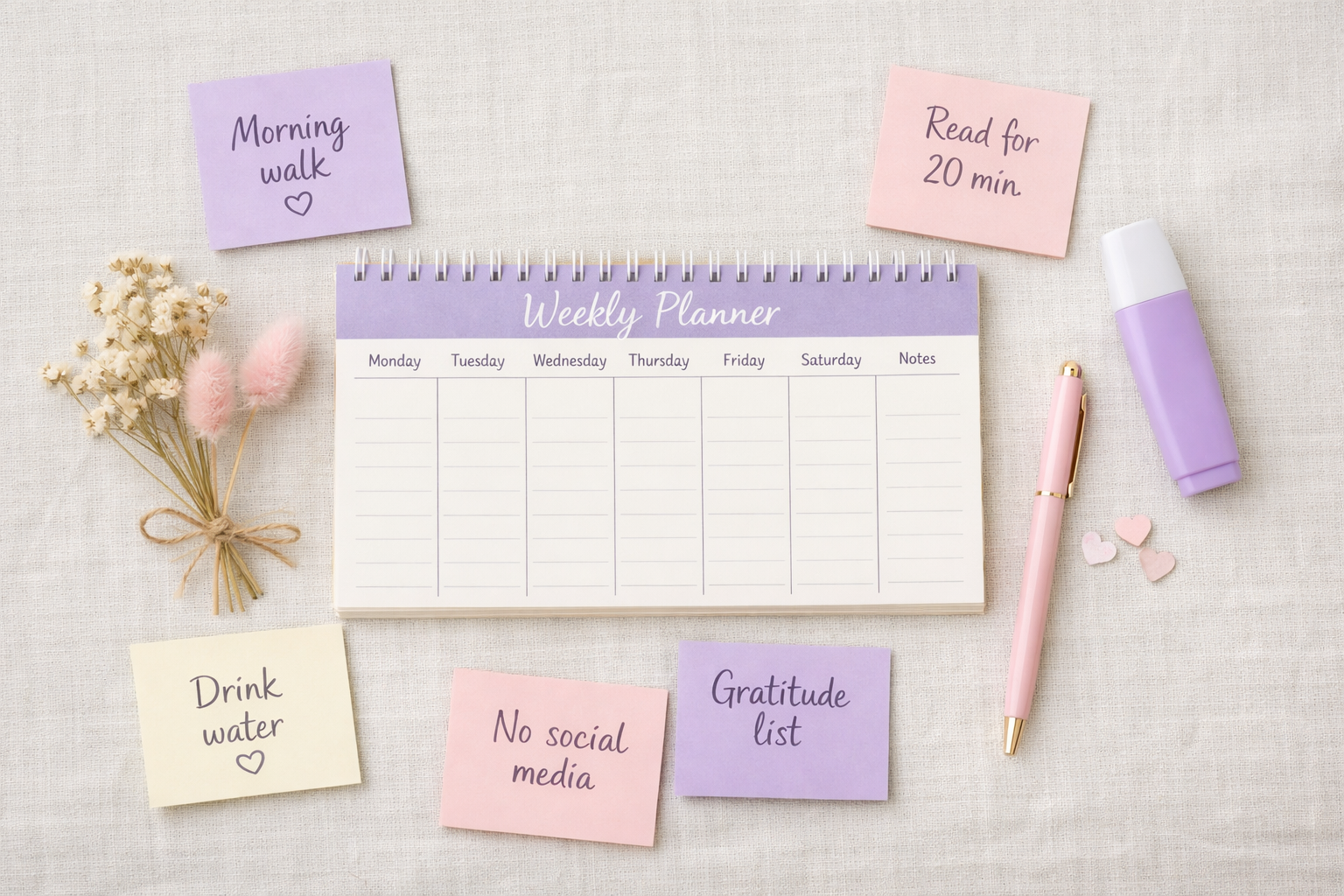
Here’s a simple weekly reset that takes less than 30 minutes:
- Sunday evening, 10 minutes: Write down three things that felt good last week and one thing that felt off.
- Monday morning, 5 minutes: Pick one small thing to look forward to this week — not a task, something enjoyable.
- Midweek check-in, 5 minutes: Ask yourself: “Am I running on empty or do I have a little something left?”
- End of week, 10 minutes: Notice if anything shifted. No pressure to have answers — just notice.
This isn’t a productivity system. It’s a way of staying in conversation with yourself so you don’t drift too far without realizing it.
Common Mistakes to Avoid When You’re Trying to Find Yourself Again
A few habits make feeling lost worse, even when they seem helpful on the surface.
Mistake 1: Waiting until you feel ready. Clarity comes from action, not the other way around. Start before you feel ready.
Mistake 2: Comparing your timeline to someone else’s. Someone else finding their purpose at 28 says nothing about what’s possible for you at 35, 42, or 50.
Mistake 3: Treating rest as a reward instead of a requirement. You can’t think clearly when you’re running on fumes. Rest is part of the process.
Mistake 4: Trying to figure everything out alone. A therapist, a coach, or even one honest friend can reflect things back to you that you can’t see from inside your own head.
Mistake 5: Expecting a dramatic “aha” moment. Most people find direction gradually, through small choices that slowly add up to something meaningful.
FAQ: How To Stop Feeling Lost In Life
Q: Is it normal to feel lost in your 30s or 40s? Yes, completely. Many women experience a significant identity shift during these decades — after kids, career changes, or simply outgrowing who they used to be. It’s a sign of growth, not failure.
Q: How long does it take to stop feeling lost? There’s no fixed timeline. Some women start feeling clearer within a few weeks of intentional reflection. For others, especially after major life changes, it can take months. Consistency matters more than speed.
Q: Can therapy help with feeling lost? Yes, especially if the feeling is tied to anxiety, burnout, or past experiences. A therapist can help you untangle what’s really going on and give you tools that generic advice can’t.
Q: What if I don’t know what I want at all? Start with what you don’t want. That’s just as useful. Eliminating what drains you is a valid first step toward finding what fills you up.
Q: Is the “soft girl era” trend actually helpful or just aesthetic? When it goes beyond aesthetics, yes. Choosing rest, joy, and gentleness as actual values — not just a vibe — helps women stop overextending themselves and start listening to what they actually need.
Q: What’s the difference between feeling lost and depression? Feeling lost is often situational and shifts with reflection and small changes. Depression is a clinical condition that affects mood, energy, and function over time. If things feel consistently dark and heavy, talking to a doctor or therapist is worth it.
Q: Do I need to have a big life purpose to stop feeling lost? No. A big purpose is not required. Feeling connected to small, meaningful things — your relationships, your creativity, your daily rituals — is enough to feel grounded.
Conclusion: You’re Not Lost, You’re In Transition
Feeling lost in life is uncomfortable, but it’s also one of the most honest signals your inner self can send. It means something needs to change — and that’s actually good news, because change is possible.
Your next steps, kept simple:
- Give yourself permission to not have it all figured out right now.
- Try the 10-minute stillness practice for one week and see what comes up.
- Identify one thing this week that’s just for you — and do it without guilt.
- Reach out to one person you trust and have an honest conversation.
- If things feel too heavy to carry alone, consider talking to a therapist.
The soft, intentional life you’re looking for isn’t far away. It starts with one small, honest step — and you’re already taking it by asking the right questions. 🌿